ᚷᛟᚦ ᛟᚲ ᛟᚾᚢᚱ ᚢᛇᛏᛁᚱ
goð ok önnur vættir
Home > Table of contents > Norse mythology > Gods and other beings
Gods and other beings
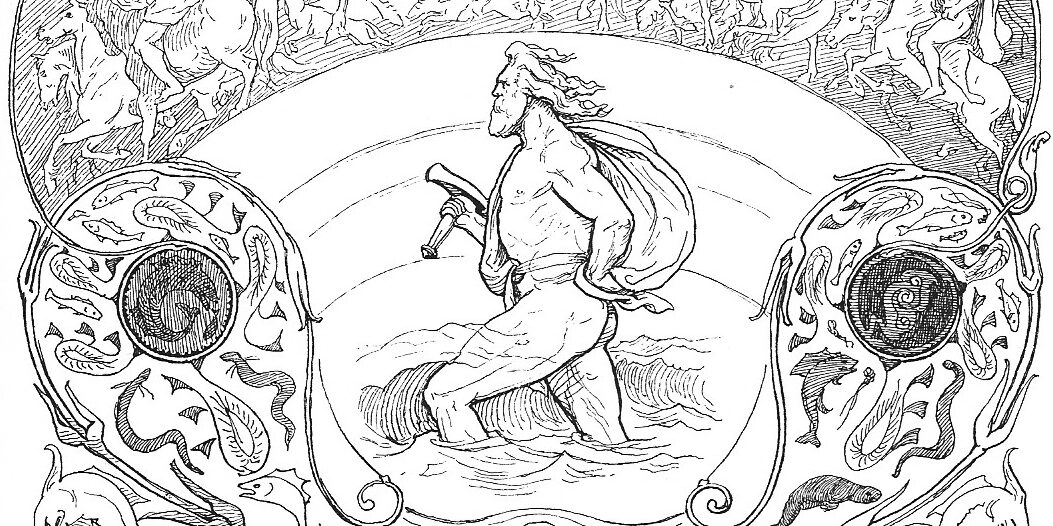
At the heart of Norse mythology lie the struggles of the gods and their interactions with other beings, especially the jötnar. For example, these figures often act as allies, adversaries, lovers, or even kin. Sources mention many gods, and evidence from place names and personal names shows that Thor, the thunder god, enjoyed the most widespread worship during the Viking Age. Moreover, armed with his hammer Mjölnir, Thor relentlessly battles the jötnar, crushes mountains, and defends both gods and humans. He marries Sif, the golden-haired goddess.
Odin: The Seeker of Knowledge
Odin frequently appears in myths as a central figure. One-eyed and accompanied by wolves and ravens, he carries a spear and roams the Nine Worlds in pursuit of knowledge. In a profound act of self-sacrifice, Odin hung himself for nine nights on the world tree Yggdrasil to learn the secrets of the runes, which he later shared with humankind. He rules Asgard as the leader of the Æsir and embodies death, wisdom, and poetry. Meanwhile, his wife, Frigg, possesses the gift of foresight but keeps much of her knowledge hidden. Together, they have a beloved son, Baldr, whose foretold death occurs because of Loki’s actions. Afterward, Baldr resides in Hel, the realm of the dead.
Freyja, Freyr, and Njörðr: The Vanir Gods
Odin shares fallen warriors with Freyja, a powerful goddess known for her beauty and strength. Wearing a feathered cloak, she practices seiðr magic and rides into battle to claim half of the slain, whom she brings to her field, Fólkvangr. Furthermore, Freyja mourns her absent husband Óðr, searching for him across distant lands.
Her brother, Freyr, represents fertility, peace, kingship, and prosperity. Notably, he falls in love with the jötunn Gerðr, which brings him joy but also shapes his fate. Their father, Njörðr, governs the sea, ships, and wealth. However, Njörðr marries the mountain goddess Skaði, a union that highlights the tension between sea and land. Freyja, Freyr, and Njörðr belong to the Vanir, a group of gods later united with the Æsir after a divine conflict.
Other Prominent Gods
The myths also feature several lesser-known gods:
- Iðunn, keeper of the apples of youth
- Bragi, god of poetry
- Heimdall, vigilant watchman born of nine mothers
- Týr, god of law and war, who sacrificed his hand to bind the wolf Fenrir
- Gefjon, credited with shaping the land of Zealand
In addition, these gods interact frequently with the major figures, influencing key events across the myths. See our glossary for the complete list of gods, beings, locations and events!
Beings Beyond the Gods
Many beings beyond the gods play significant roles:
- Elves: radiant beings whose nature often contrasts with dwarfs
- Dwarfs: skilled smiths of the earth
- Jötnar, thursar, and trolls: may oppose the gods, assist them, or coexist among them
- Female fate-associated beings: Norns, dísir, and valkyries, whose duties overlap yet remain distinct, shaping destiny and the outcomes of battles
Overall, these beings enrich Norse mythology, creating a complex world where gods, giants, and humans interact in unpredictable ways.
<<< Previous page
norse mythology
next page >>>