ᛞᚢᛖᚱᚷᚨᚱ
dvergar
Home > Table of contents > norse mythology > gods and other beings > the Dwarfs in Norse Mythology
the Dwarfs in Norse Mythology
In Norse mythology, dwarfs (dvergar) are primordial supernatural beings deeply embedded in the structure of the cosmos. They are not marginal folklore creatures but essential participants in the creation, maintenance, and magical economy of the Nine Worlds. Unlike later traditions that define dwarfs primarily by small stature, the earliest Old Norse sources emphasize their functions, origins, and powers rather than their physical appearance. Dwarfs are consistently portrayed as otherworldly, morally ambiguous beings whose knowledge and craftsmanship surpass that of gods and humans alike.
Cosmic Origins and Place in the Nine Worlds
According to Völuspá and Snorri’s Prose Edda, dwarfs originated from the substance of the world itself. In one account, they are formed from the earth; in another, they arise like maggots from the flesh of the primordial giant Ymir, whose body becomes the world. This origin ties dwarfs directly to the material foundations of existence. They belong neither to Ásgarðr nor to Midgard, but inhabit subterranean realms associated with stone, mountains, and the deep earth, often identified with Svartálfaheimr. In this way, dwarfs function as chthonic beings within the Nine Worlds, linked to matter, transformation, and hidden knowledge.
Dwarfs, Elves, and Overlapping Identities
Norse sources reveal a notable ambiguity between dwarfs and elves. In the Prose Edda, dwarfs are said to inhabit Svartálfaheimr, the realm of the svartálfar (“black elves”), suggesting that the two groups may have been understood as identical or closely related. This overlap is reinforced by the names of dwarfs listed in Völuspá, many of which incorporate the word álfr (“elf”), and by the inclusion of Yngvi—another name for the god Freyr, ruler of Álfheimr—among the dwarf names. Rather than being clearly separated races, dwarfs and elves appear in Norse mythology as intersecting categories of supernatural beings, distinguished more by role and relationship than by rigid taxonomy.
Appearance and the Irrelevance of Size
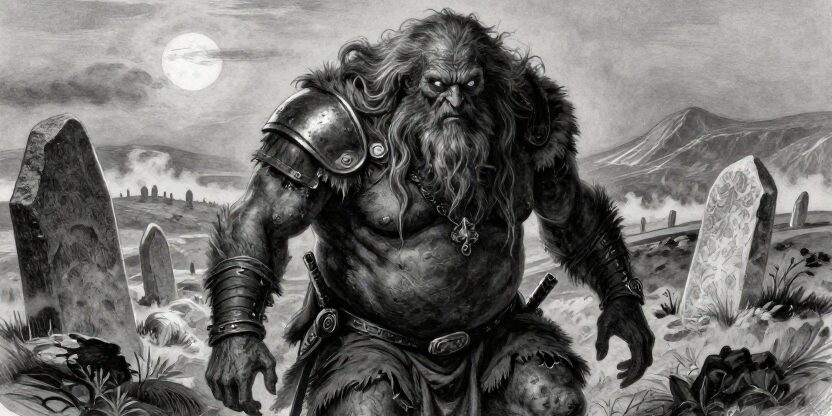
In early Norse mythological texts, dwarfs are described as humanlike (mannlíkun), capable of standing, sitting, speaking, and interacting with gods and humans. Their size is rarely specified, and when it is, it is inconsistent. Some dwarfs are implied to be comparable in size to humans, while others may be small or capable of changing size entirely. The later stereotype of dwarfs as uniformly short is largely absent from Eddic poetry and appears to develop in legendary sagas and post-Christian folklore. In Norse mythology proper, a dwarf’s identity is defined by function—crafting, guarding, cursing, or mediating hidden powers—rather than by physical stature.
Master Craftsmen of the Gods
Dwarfs are the supreme craftsmen of Norse mythology. They forge the most powerful and iconic objects wielded by the gods, including Mjölnir, Gungnir, Draupnir, Gullinbursti, Skíðblaðnir, and Sif’s golden hair. They also create the Mead of Poetry from the blood of Kvasir, granting wisdom and poetic skill to gods and humans. This craftsmanship is not freely given; treasures are often obtained from dwarfs through coercion, trickery, or force, especially by Loki. This lack of reciprocity distinguishes dwarfs from elves, who are associated with ritual exchange and blessing. Dwarfs are thus portrayed as reluctant donors of cosmic power, reinforcing their role as guarded keepers of primordial resources.
Social Isolation and Moral Ambiguity
Unlike the gods, dwarfs are not depicted as receiving worship or sacrifices in pre-Christian Norse religion. They do not participate in blóts and maintain no reciprocal relationship with humans. Instead, they exist as isolated beings, frequently hostile or resentful when their treasures are taken. Their moral alignment is ambiguous: they can create objects that sustain cosmic order, yet they also lay devastating curses, as seen with Andvari’s ring or the sword Tyrfing. This duality presents dwarfs as necessary but dangerous beings—integral to the functioning of the world, yet fundamentally alien to divine and human society.
Stone, Sunlight, and Subterranean Existence
Dwarfs are inseparably linked to stone, mountains, and the underground. Old Norse poetry frequently blurs the distinction between dwarfs living within stones and being stones themselves. Kennings refer to rocks as “the house of the dwarf,” and multiple narratives describe dwarfs retreating into stones that close behind them. Sunlight is often fatal to dwarfs, turning them into stone, as in Alvíssmál. This reinforces their identity as nocturnal, hidden beings whose power belongs to the interior of the world rather than its surface.
Disease, Curses, and Hidden Threats
Beyond craftsmanship, dwarfs are associated with illness and unseen harm. Old Norse and related North Sea traditions preserve the idea that sickness could be caused by supernatural beings, including dwarfs, often imagined as projectiles or invasive forces. Charms and inscriptions invoking gods such as Odin and Thor to ward off harmful dwarfs suggest that they were feared as agents of disease. This association aligns with their broader mythological role as hidden, penetrating forces that affect the human world from beneath its surface.
Gender, Kinship, and Limited Visibility
In Eddic sources, dwarfs are overwhelmingly male, though they are described as having families, including brothers, sons, daughters, and sisters. Female dwarfs are rarely mentioned in early mythological poetry but appear more clearly in later saga literature, often in domestic or familial contexts. This absence likely reflects narrative focus rather than belief, as dwarfs are primarily encountered by gods seeking objects, not social relationships. Where dwarf children appear in sagas, they are portrayed as deeply valued and protected, suggesting that dwarfs were conceived as having strong internal kinship bonds despite their isolation from other beings.
The Role of Dwarfs in Norse Cosmology
Within the Nine Worlds, dwarfs represent the hidden mechanisms of creation: the forces that shape matter, forge power, and bind magic into physical form. They are neither chaotic like the giants nor ruling like the gods, but essential intermediaries between raw substance and divine order. Their secrecy, resistance, and ambiguity make them embodiments of the dangerous knowledge buried within the world itself. In Norse mythology, dwarfs are not defined by smallness or simplicity, but by depth, concealment, and indispensable power.
<<< previous page
the elves in norse mythology
next page >>>