
ᚾᛟᚱᛇᚾ ᚺᛖᛁᛗᛊᛗᛁᚾᛞ
norræn heimsmynd
Home > Table of contents > Norse mythology > norse cosmology
Norse Cosmology
Norse cosmology describes how the ancient North Germanic peoples understood the universe, its origins, structure, and eventual fate. These beliefs come primarily from the Poetic Edda and the Prose Edda, written down in the 13th century but rooted in much older oral traditions. At the heart of this worldview stands Yggdrasil, the cosmic tree, around which all existence is organized.
Time and Space
Time in Norse belief is not strictly linear. While myths describe a clear sequence of events, they also suggest a cyclical concept of time. The idea that the world can be destroyed and reborn multiple times. Creation, destruction, and renewal are all part of the cosmic order.
Creation of the Cosmos
Before the world existed, there were two opposing realms:
- Muspell, a realm of fire and heat
- Niflheim, a realm of ice, fog, and cold
Between them lay the void Ginnungagap. When fire and ice met, they formed the primordial being Ymir, ancestor of the jötnar (giants). From Ymir’s body, and with the help of the primeval cow Auðumbla, the first gods emerged.
Auðumbla uncovered Búri, whose descendants included Odin, Vili, and Vé. These three gods killed Ymir and shaped the world from his body, earth from his flesh, seas from his blood, mountains from his bones, and the sky from his skull. Humanity was later created from two trees: Askr and Embla.
Gods and Realms
The gods built Asgard as their home and surrounded the human world, Midgard, with protective barriers. The cosmos was structured vertically and horizontally, with realms connected through Yggdrasil. Sparks from Muspell became the stars, sun, and moon, all set into motion with fixed paths.
Personifications of Nature
Natural forces were often personified as divine beings:
- Sól (the Sun) and Máni (the Moon)
- Nótt (Night) and Dagr (Day)
- Jörð (the Earth)
- Ægir and Rán, rulers of the sea, along with their nine wave-daughters
This reflects a worldview where nature itself was alive and sacred.
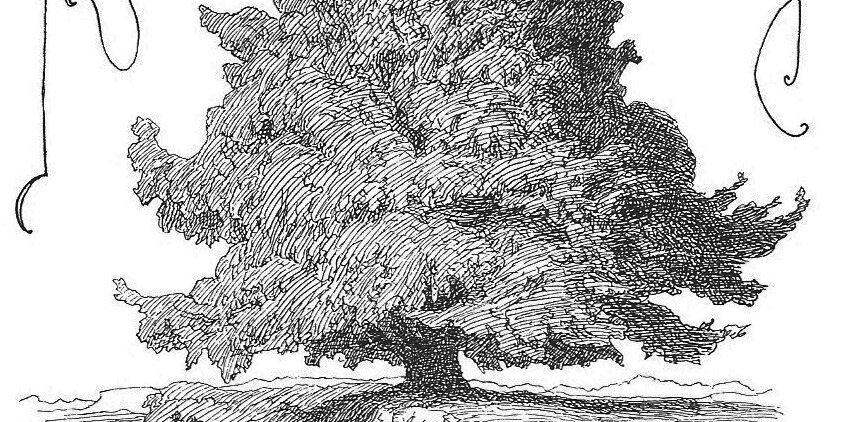
Yggdrasil, The World Tree
Yggdrasil connects all realms. Its branches stretch across the heavens, while its roots reach deep into sacred wells such as Urðarbrunnr, Mímisbrunnr, and Hvergelmir. Many creatures live upon it, including the dragon Níðhöggr, stags, and an unnamed eagle. The gods gather at Yggdrasil daily to hold council.
More about yggdrasil >>>
The Nine Worlds
Norse sources speak of Nine Worlds surrounding Yggdrasil. While no single text lists them clearly, scholars commonly identify realms such as:
Ásgarðr
The realm of the Æsir gods, ruled by Odin. A fortified world of power, honor, and divine order, connected to Midgard by the rainbow bridge Bifröst.
Vanaheimr
The home of the Vanir gods, associated with fertility, nature, and magic. A realm of balance and ancient wisdom, once at war with Asgard before peace was forged.
Álfheimr
The bright realm of the ljósálfar (light elves). A world of beauty and light, closely tied to fertility, growth, and the life-giving forces of nature.
Miðgarðr
The world of humankind, forged from the body of the primordial giant Ymir and protected by the gods. Midgard stands at the center of the cosmos, bound to Asgard by Bifröst.
Jötunheimr
The harsh and untamed land of the jötnar (giants). A realm of raw nature, chaos, and ancient enemies of the gods, lying beyond the borders of the ordered worlds.
Múspellsheimr
A realm of fire and destruction, ruled by the fire giant Surtr. A land of flames and chaos, destined to burn the world during Ragnarök.
Svartálfaheimr / Niðavellir
The dark realm of dwarves and dark elves, masters of craft and metalwork. From here came many of the gods’ most powerful weapons and artifacts.
Niðavellir
Niðavellir is the dark, subterranean realm of the dwarves in Norse mythology. Its name means “Dark Fields,” and it is described as a world of stone, metal, and underground halls where master smiths forge. In the Eddic sources, Niðavellir is sometimes identified with Svartálfaheim, reflecting the blurred distinction between dwarves and dark elves in Old Norse myhtology.
Niflheimr (sometimes hel)
A cold, mist-filled world of ice, fog, and primordial darkness. One of the oldest realms, linked to death, stillness, and the well of Hvergelmir.
Hel
The realm of the dead who did not fall in battle. Ruled by the goddess Hel, it is a cold and silent world where souls dwell after death by sickness or old age.
Together, these worlds contain gods, humans, giants, elves, dwarves, and the dead.
More about the nine worlds >>>
The Fate of the World: Ragnarök
The future of the cosmos is foretold in Ragnarök, a cataclysmic series of events involving great battles, natural disasters, and the deaths of many gods. The world is submerged, but this is not the end. After Ragnarök, the earth rises again. Renewed and fertile. The surviving gods return, and humanity is reborn through Líf and Lífþrasir, who emerge from Yggdrasil.
More about Ragnarök >>>
<<< previous page
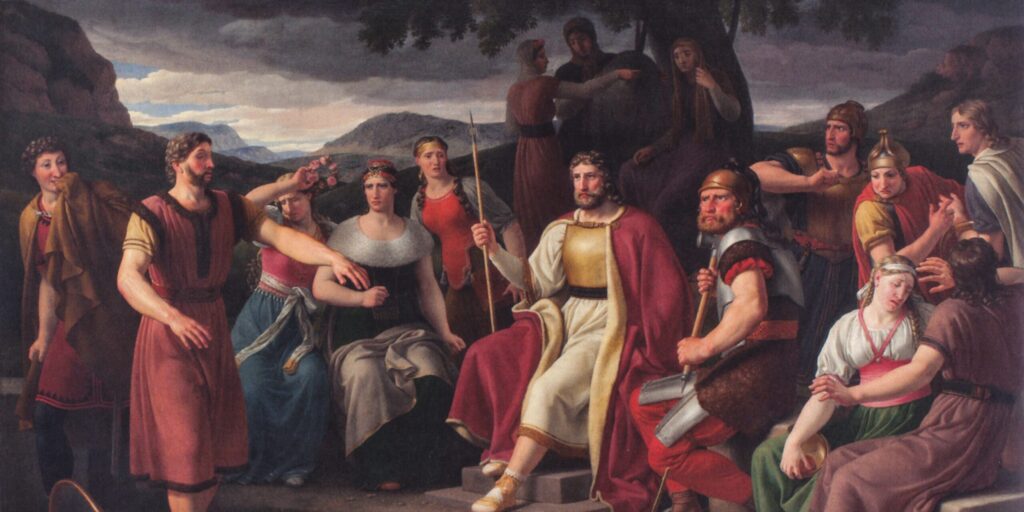
family tree of the norse gods
next page >>>
Yggdrasil