ᛇᛊᛁᚱ
æsir
Home > Table of contents > Norse mythology > Gods and other beings > The Æsir in Norse Mythology
The Æsir in Norse Mythology
What Does “Æsir” Mean?
In Old Norse sources, the word “áss” is often used interchangeably with “goð” (god). Rather than marking a strict difference, the term Æsir appears to function as a poetic and collective name for the gods. Even figures usually associated with the Vanir, such as Njörðr, Freyr, and Freyja, are at times included among the Æsir, showing how closely the groups became connected over time.
The Æsir and the Vanir
The main stories that separate the Æsir and the Vanir describe an ancient conflict known as the Æsir–Vanir War, told in sources such as Völuspá, Ynglinga saga, and Skáldskaparmál. The war ends in reconciliation: the two groups exchange hostages, and peace is sealed. After this, the Vanir gods become fully integrated into the Æsir, forming one united pantheon.
Scholars have suggested various explanations for this division. From differences in social roles (war, rule, fertility) to echoes of older religious or cultural conflicts. Regardless of origin, the myths portray the Æsir and Vanir not as permanent rivals, but as gods who ultimately stand together.
The Æsir Gods
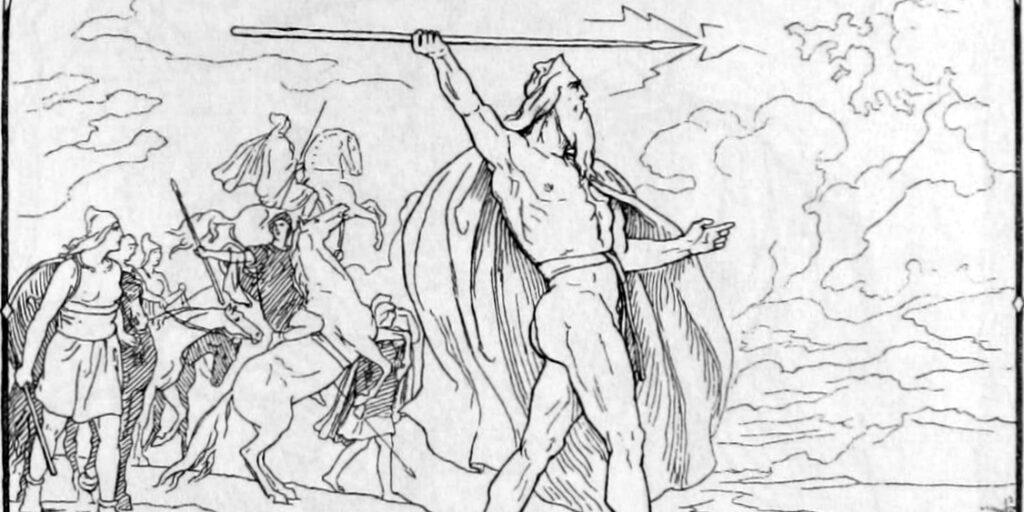
The Prose Edda, written by Snorri Sturluson, provides several lists of the Æsir, which vary slightly between sources. The principal gods include Odin, ruler of the gods; Thor, god of thunder; Njörðr, god of the sea and wealth; Freyr, associated with fertility and kingship; Týr, god of law and sacrifice; Heimdall, watchman of the gods; Bragi, god of poetry; Víðarr and Váli, both linked to vengeance; Ullr, associated with archery and skiing; Forseti, god of justice; and Loki, the trickster and agent of change.
The goddesses (ásynjur) include Frigg, queen of the Æsir; Sif; Freyja; Sága; Eir; Gefjon; Fulla; Sjöfn; Lofn; Vár; Vör; Syn; Hlín; Snotra; Gná; Sól; Bil; as well as Skaði, Sigyn, Hnoss, Gerðr, Jörð, Iðunn, Ilmr, Njörun, Nanna, Rindr, Þrúðr, and Rán.
The variation in these lists reflects that Norse belief was never fully fixed or uniform across time and place.
Local Æsir and Sacred Places
The term áss was also used for local or regional gods, tied to specific lands, hills, or farms. Figures such as Barðr Snæfellsáss and Svínfellsáss were believed to protect local communities. This suggests that the Æsir were not only cosmic gods, but also deeply connected to everyday life and place.
The Æsir and the Jötnar
Norse myths often describe a tension between the Æsir and the jötnar (giants), representing the boundary between order and chaos. Thor frequently confronts the jötnar to defend Ásgarð and Miðgarð. Yet the relationship is not purely hostile.
Many Æsir are descended from jötnar, including Odin, Thor, and Loki and marriages between gods and giantesses are common. Odin fathers Thor with Jörð, and Freyr marries Gerðr. Some jötnar, such as Ægir, are allies, while others serve as sources of wisdom, challenged by Odin or consulted by Freyja.
A Living, Complex Pantheon
Rather than a simple divide between gods and enemies, Norse mythology presents a world of overlapping roles, shifting alliances, and shared origins. The Æsir are not distant or flawless. They struggle, negotiate, sacrifice, and change. This complexity is what gives their stories lasting power.
<<< previous page
gods and other beings
next page >>>